

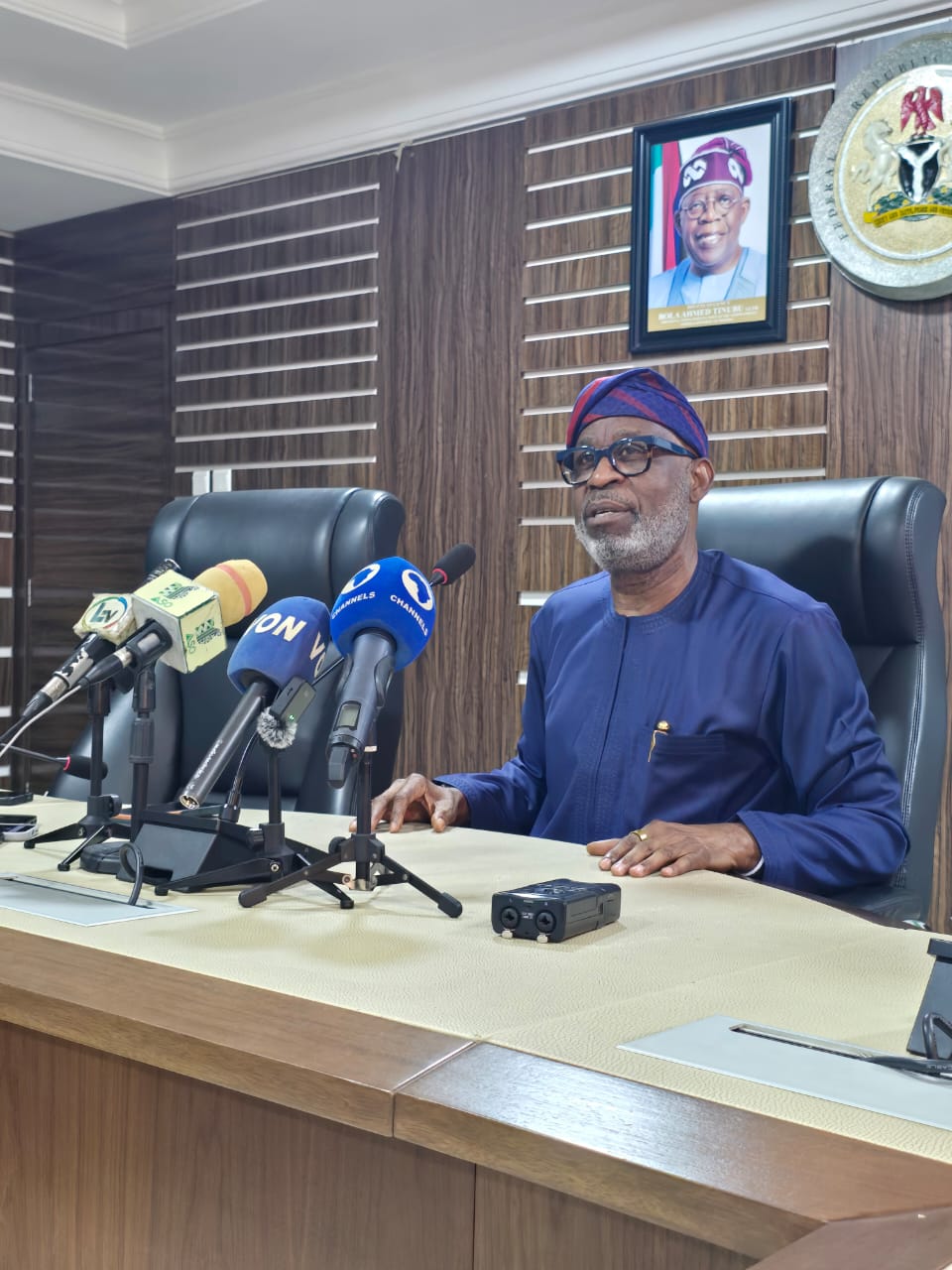
ABUJA – The Minister of Solid Minerals Development, Dele Alake, has defended the removal of fuel subsidy, saying Nigeria could have slipped into severe economic crisis if the policy had been sustained.
Alake said the subsidy regime primarily benefited wealthy Nigerians, fuel cartels and smugglers rather than the majority of citizens, who he said owned few or no vehicles.
The minister stated this while explaining the rationale behind the Federal Government’s economic reforms, arguing that continuing to fund the subsidy would have worsened the country’s fiscal crisis.
According to him, wealthy families with several vehicles enjoyed greater benefits from subsidised petrol, while poorer Nigerians, many of whom did not own cars, received little or no direct benefit.
He said, “When you break the whole thing down, when you are privy to the numbers and to the logical analysis of the situation, you discover that, in the era of subsidy, the well-to-do, the well-heeled, the elites, one family will have five vehicles, 10 cars, and you are subsidising fuel for those 10 cars belonging to one family, whereas the average Nigerian had one or none.”
Alake also accused fuel smugglers and cartels of exploiting the subsidy regime by buying petrol at subsidised rates in Nigeria and selling it across neighbouring borders for huge profits.
He argued that the subsidy had also failed to prevent increases in transportation fares, noting that Nigerians had complained about high transport costs even when petrol was subsidised.
The minister said the removal of the subsidy was therefore necessary to free government resources for infrastructure and other productive sectors of the economy.
He recalled that several states struggled to pay workers’ salaries during the subsidy era, while the Federal Government itself resorted to borrowing to meet its obligations.
Alake said the decision to remove the subsidy required political courage, adding that President Bola Tinubu took the decision despite the expected political backlash.
He acknowledged the hardship caused by the reforms but likened the process to childbirth, saying the initial pain would eventually give way to economic gains.
“Every government policy requires a gestation period. You can’t announce a policy today, conceptualise a policy today, and expect the results to manifest tomorrow,” he said.
The minister further argued that the subsidy removal was not unexpected, noting that funding for the scheme under the previous administration was scheduled to end in 2023.
He said the Tinubu administration inherited a situation in which there was no budgetary provision to continue funding the subsidy beyond June 2023.
Defending the timing of the policy, Alake said there would never be a perfect time to stop a policy that was deepening an economic crisis.
“When you are in a hole, you stop digging. Are you going to say, because I’m in a hole, let me wait for the good time or the right time to stop digging? You keep going deeper in the abyss,” he said.
He warned that failure to remove the subsidy could have triggered a much worse currency crisis, saying Nigerians might have needed wheelbarrows to carry naira notes to purchase basic commodities.
“If we hadn’t taken that decision, if the President hadn’t done it the day he did it, three, four months thereafter, you’ll be using a wheelbarrow to carry currencies to buy one loaf of bread,” Alake said.
He cited Germany’s hyperinflation crisis in the period before Adolf Hitler’s rise to power as an example of how severe economic distortions could destabilise a country.
Alake also rejected claims that Tinubu is a dictator, describing the President as one of the country’s strongest democrats.
He said his assessment was based on his experience working with Tinubu before, during and after his tenure as Lagos State governor.
“I’m not speaking out of partisanship. I’m speaking from personal conviction,” Alake said, adding that he was involved in some of the policies that he said contributed to Lagos becoming one of Africa’s largest economies.