

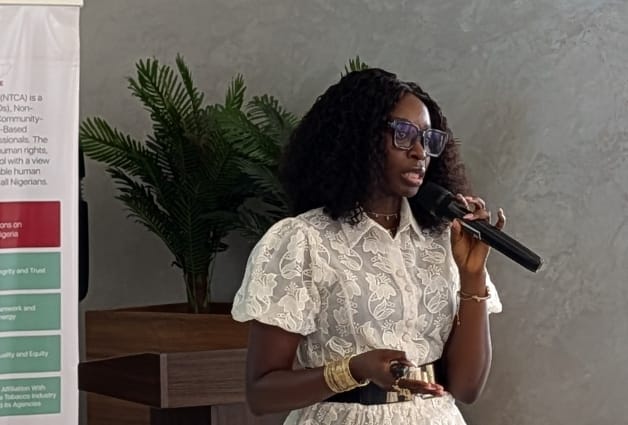
By Toyin Victor-Abuja
The Nigeria Tobacco Control Alliance (NTCA) has documented 42 incidents of tobacco industry activities across 11 locations in Nigeria, revealing how tobacco companies maintain their visibility through neighbourhood retail outlets, social media promotions, entertainment platforms and engagements with government institutions.
The findings are contained in a report titled How Tobacco Industry Undermines Public Health Rules in Nigeria, prepared by Blessing Yashim, Monitoring and Evaluation Officer at NTCA, following a monitoring exercise conducted between January and August 2026.
The exercise covered the Federal Capital Territory and ten states: Abia, Edo, Kaduna, Katsina, Lagos, Nasarawa, Ogun, Ondo, Oyo and Rivers. Of the 57 submissions received, 42 distinct incidents were verified, with 15 involving corporate social responsibility activities and engagements with public institutions, while 27 concerned tobacco advertising, promotion and sponsorship.
Among the activities documented was the partnership between the British American Tobacco Nigeria Foundation and the National Youth Service Corps under the Farmers for the Future programme. The partnership was renewed in January 2026 for another three years, with provisions to promote the initiative through NYSC orientation camps and communication channels.
The report also identified the foundation’s Graduate Agripreneur Programme, which reached graduates across four public universities: the Federal University of Agriculture, Abeokuta; the University of Ilorin; the University of Ibadan; and Michael Okpara University of Agriculture, Umudike. NTCA raised concerns about the institutional visibility tobacco companies could gain through such initiatives.
Government institutions also featured in the findings. In February 2026, the Nigeria Social Insurance Trust Fund and the Nigeria Employers’ Consultative Association recognised British American Tobacco Nigeria under the Safe Workplace Intervention Project, presented by the Federal Ministry of Labour and Employment.
In June 2026, the Nigeria Customs Service signed a memorandum of understanding with British American Tobacco Nigeria to combat illicit tobacco trade through intelligence-sharing, capacity-building and coordinated enforcement. The report also documented Japan Tobacco International Nigeria’s activities involving workplace diversity, gender equity and graduate development.
Beyond institutional engagements, NTCA monitors found cigarette packs displayed alongside biscuits, sweets, chewing gum and other confectionery in neighbourhood shops. Some retailers also positioned cigarette cartons openly on counters, placing tobacco products within everyday shopping environments frequented by children and young people.
The report further identified online promotions of electronic cigarettes, heated tobacco products and flavoured nicotine pouches, including products marketed with flavours such as bubble gum, melon ice and piña colada. Some advertisements on Instagram and Facebook featured young models, colourful packaging and lifestyle imagery.
Entertainment and celebrity culture also featured in the findings, with smoking imagery appearing in concert promotions, music videos and social media content involving Nigerian entertainers, including Naira Marley, Seyi Vibez, BNXN and Sarz.
One example was a promotional graphic shared on Naira Marley’s verified Instagram account for an Abuja concert, featuring a smoking silhouette. The report also referenced smoking imagery in Seyi Vibez’s music video My Healer and the visualiser for Already by BNXN and Sarz.
The report further highlighted how cigar retailers leveraged the publicity surrounding Farooq Oreagba’s appearance at the 2024 Ojude Oba festival with a lit cigar to promote their products through gifts and social media content, associating cigar smoking with fashion, celebrity culture and social status.
Against these findings, NTCA is calling on the Federal Ministry of Health and Social Welfare, regulatory agencies and other government institutions to strengthen enforcement of existing tobacco-control laws, monitor retail and digital marketing activities and ensure transparency in all dealings with tobacco companies.
The alliance is also urging government institutions to end corporate social responsibility arrangements and partnerships that could give tobacco companies access to public institutions or create the impression of government endorsement. It maintains that stronger political will, institutional accountability and sustained enforcement are necessary to protect Nigerians, particularly children and young people, from tobacco industry influence.