

By our correspondent
ABUJA – Religious leaders in Kano State have thrown their weight behind increased participation of women in governance, saying Christian and Muslim leaders in the state have overcome religious concerns that could hinder women’s leadership.
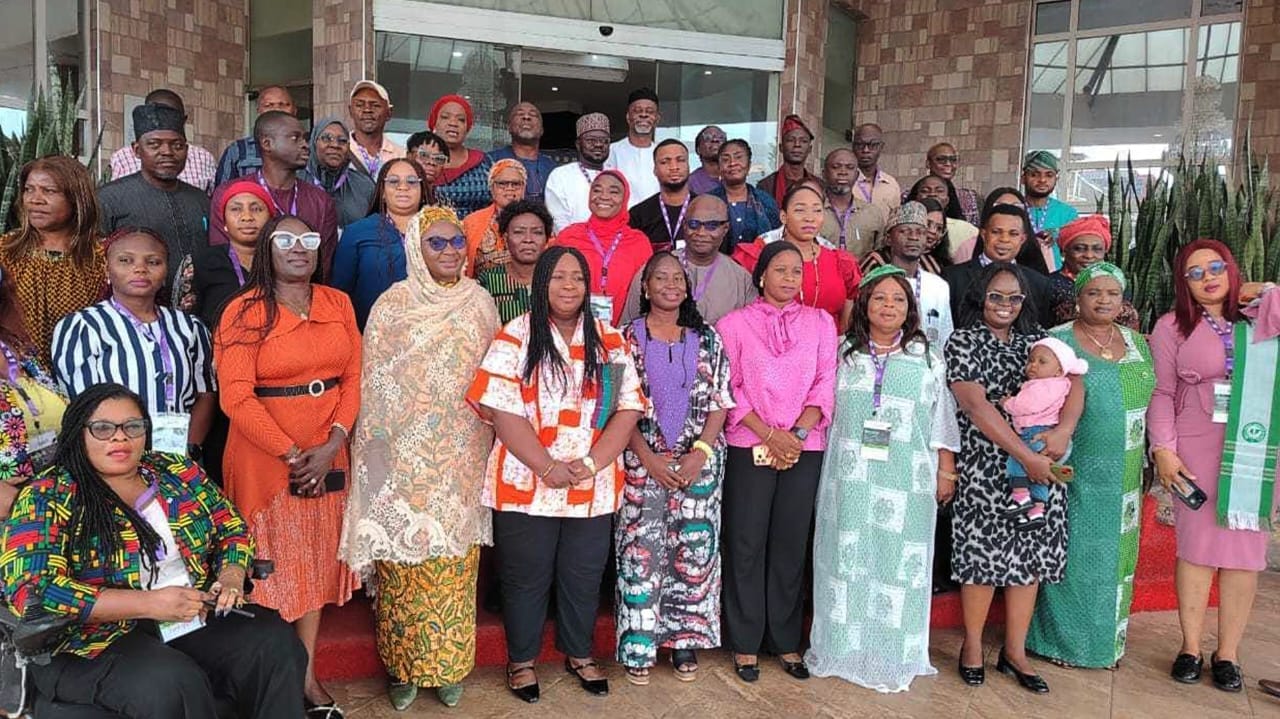
A cross section of leaders present at the event spoke on Tuesday in Abuja during the launch of a 24-month project, “Women Can Lead,” aimed at strengthening women’s participation in governance and decision-making.
Speaking at the conference, the immediate past Chairman of the Christian Association of Nigeria in Kano State, Rev. Adeyemo Adeolu Samuel, said religious leaders in the state had embraced initiatives promoting women’s leadership.
Samuel said, “There is no longer that disparity” between Christian and Muslim leaders on issues concerning women’s participation, adding that both sides were working together to promote women’s advancement.
He said, “We are putting together faith leaders in Kano, both Christian and Muslim faith leaders. There is no longer that disparity that this is a woman and this is not. In Kano, we buy into this fully.”
Also speaking, the Side-by-Side, SBS Co-Chairman in Kano State, Barrister Aisha Ali Tijjani, said the project had helped create a platform where Christian and Muslim religious leaders could interact and address issues affecting their communities.
Tijjani said, “Prior to this development, we didn’t have any platform that Christians and Muslim leaders belonged to. But with the intervention of Side by Side, we are now friends.”
She added that religious leaders had discussed issues surrounding women’s participation and were convinced that the advocacy did not conflict with religious teachings.
“I don’t think we are going to have any problem as we have already conquered and overcome that issue internally. So, with this programme coming to Kano, it is not a new thing. We will just be stressing it to the religious leaders, and I assure you they are going to give us 101 per cent support,” she said.
On his part, the Founder and Project Director of the Centre for Leadership, Strategy and Development, Dr Otive Igbuzor, called on the National Assembly to pass the proposed reserved seats bill for women.
Igbuzor said Nigeria had made slow progress in women’s political representation, noting that women’s participation in governance remained significantly below their population strength.
He said constitutional provisions were among the measures that had helped other countries improve women’s representation in parliament, citing Rwanda, Senegal, South Africa and Uganda.
According to him, the proposed reserved seats bill offers an opportunity for Nigeria to address the persistent gap in women’s representation.
“Nigeria is on the right track asking for special seats. The numbers have shown that if 10 per cent of women are candidates, it will not amount to 10 per cent,” he said.
Igbuzor urged members of the 10th National Assembly to treat the passage of the bill as a major responsibility, saying its outcome would form part of the historical record of the lawmakers.
He also urged the media to sustain public attention on the proposed legislation by regularly reporting its progress.
“I call on the media to monitor stories on reserved seats. For newspapers, they should create a small section: ‘Where are we on the reserved seats?’ Every news item should get something on the reserved seats,” he said.
Igbuzor further argued that women’s participation in leadership was important to national development, saying Nigeria could not afford to exclude a substantial portion of its population from decision-making.
The Women Can Lead Project, launched in Abuja on Tuesday, September 29, 2026, is designed to strengthen women’s participation in governance and decision-making over a 24-month period, with engagement of stakeholders including religious leaders and other community actors.