

By Toyin Victor, ABUJA
A visit to a health facility for routine antenatal care should offer reassurance, not leave a pregnant woman struggling to breathe. But that was the distressing experience reported by Khadija Yunusa in Kano State, highlighting the risks Nigerians face when tobacco smoke drifts into public spaces where they should be protected.
Emmanuel Onwuka, a tobacco control advocate based in Abuja, is calling for stronger action to protect Nigerians from second-hand smoke, as the Nigeria Tobacco Control Alliance (NTCA) pushes for the establishment of smoke-free cities across the country.
Khadija reportedly experienced breathing difficulties, chest tightness and persistent vomiting after inhaling smoke from cigarettes and other products used by young men gathered beside Aisami Health Clinic in Sani Mai Nagge Ward, Gwale Local Government Area of Kano State. According to a report by Nigeria Info, the incident left her worried about her unborn baby and reluctant to return to the facility.
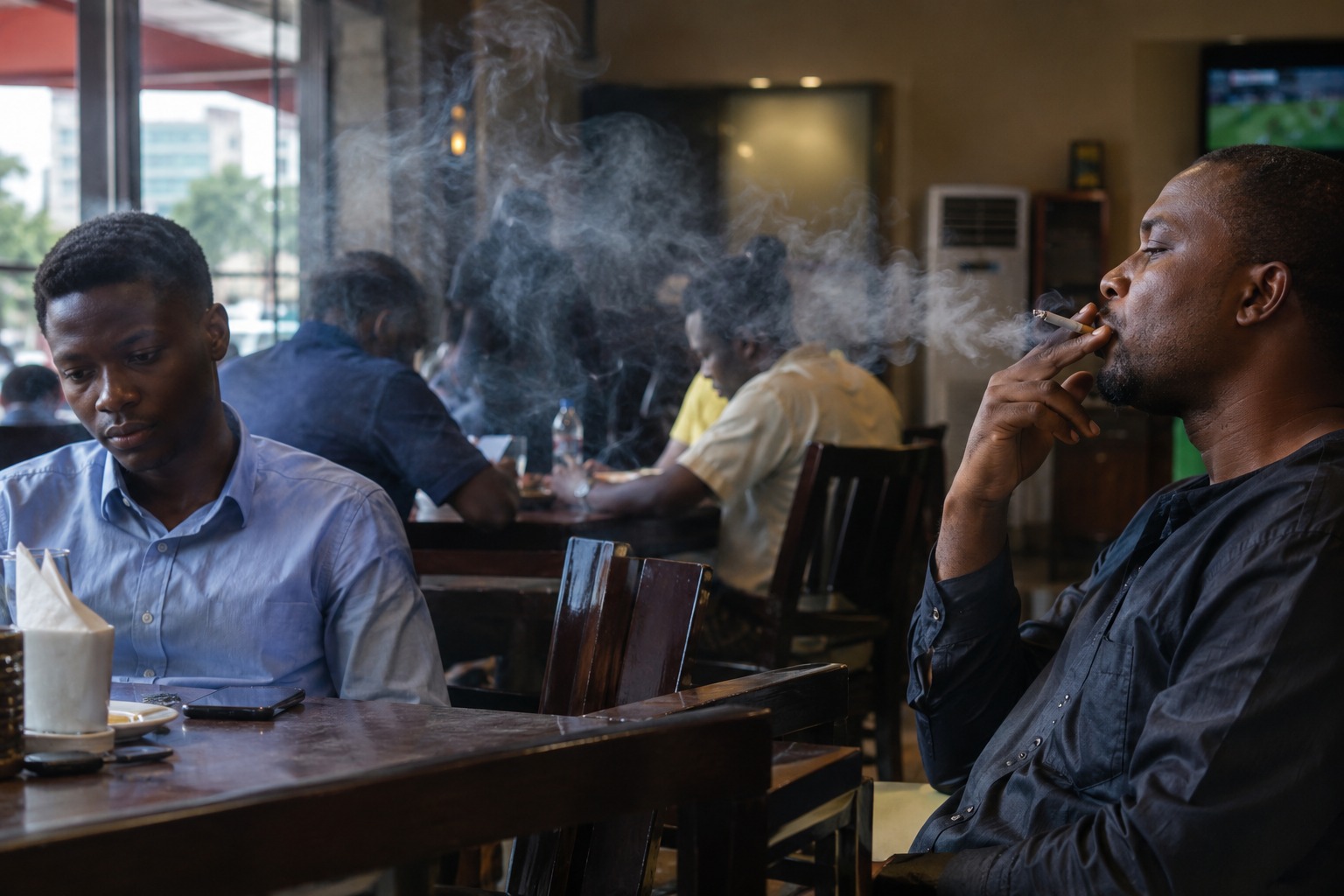
The incident highlights a public-health concern that extends beyond those who smoke. The World Health Organization says there is no safe level of exposure to second-hand tobacco smoke, which is associated with heart disease and lung cancer in adults, as well as respiratory illnesses in children.
Nigeria’s 2012 Global Adult Tobacco Survey revealed the scale of the problem at the time, recording exposure to other people’s smoke in workplaces, restaurants, government buildings, public transport and healthcare facilities. About 27 per cent of adults working indoors reported exposure, while approximately 16 per cent of non-smoking indoor workers had also inhaled other people’s smoke. These figures are historical estimates, not measurements of current exposure.
The danger cannot be eliminated simply by opening windows, installing fans or separating smokers from other occupants. The World Health Organization maintains that completely smoke-free indoor environments offer effective protection against second-hand smoke, as ventilation and air filtration cannot reliably remove all harmful substances.
Nigeria’s National Tobacco Control Act 2015 and the National Tobacco Control Regulations 2019 provide a framework for regulating smoking in public places and workplaces. The rules address smoking restrictions, notices in prohibited areas and the responsibilities of those managing covered premises. However, the effectiveness of these protections depends on public awareness, compliance and consistent enforcement.
The NTCA is urging governments, businesses, community leaders and other stakeholders to support smoke-free cities. The alliance has highlighted tobacco-control efforts in Rivers and Imo States, including advocacy to strengthen smoke-free measures in Rivers and initiatives to protect young people and promote smoke-free communities in Imo. In June 2026, the Rivers State Ministry of Health announced plans to strengthen tobacco-control policies and improve protection against second-hand smoke.
To turn these efforts into meaningful protection, relevant authorities need to clarify enforcement responsibilities, conduct regular inspections and establish accessible channels for reporting violations. Advocates are also calling for transparent reporting of complaints and enforcement outcomes, alongside comprehensive smoke-free indoor policies consistent with Nigeria’s legal framework. The objective is to ensure that access to healthcare, workplaces, restaurants and public transport does not come at the cost of involuntary exposure to harmful tobacco smoke.